
AI is no longer a nice to have capability for managed service providers. It has become essential for survival and long term growth. What once served as a competitive edge is now a baseline expectation as clients demand faster, smarter, and more proactive service delivery. The rapid expansion of the generative AI market reflects this shift, with forecasts projecting growth from $67.18 billion to $967.65 billion between 2024 and 2032.
This pace of change is forcing organizations to rethink how they operate. Research shows that companies must revisit their business strategies every two to five years to keep up with evolving market conditions. For employees, this constant transformation can be overwhelming, with 71% reporting increased stress tied to workplace change. For MSPs, AI offers a practical way to manage this complexity by automating routine tasks, improving decision making, and delivering measurable improvements without adding operational strain.
The business impact is already clear. Studies indicate that 76.4% of organizations expect AI powered services to account for 11 to 50% of their revenue in the near future, alongside a projected 20% gain in operational efficiency. Real world examples support these expectations. One organization deployed more than 100 automations and saved 14,000 hours in a single year, the equivalent of 88 full time roles.
This article explores how forward thinking MSPs are using AI to transform their service models, unlock new revenue opportunities, and deliver greater value to clients in 2025 and beyond.
The Shift from Traditional MSPs to AI-Driven Strategic Partners
Traditional MSPs are going through a complete transformation in 2025. They have evolved from technical troubleshooters into AI-powered strategic partners. Industry experts now call this change “MSP 3.0” – a new approach built on intelligent orchestration and business outcomes rather than just fixing technical problems.
From Reactive Support to Proactive Strategy
Traditional MSP models waited for systems to fail before taking action. Remote monitoring tools existed but needed heavy human involvement. Modern MSPs now use AI to build anticipatory service models that work better:
- Predictive maintenance: AI studies years of logs to spot failures before they occur. This makes downtime something you can prevent
- Pattern recognition: AI-powered systems connect signals from endpoints, networks, and identities. This cuts average threat response time by 44%
- Self-healing systems: Automation and AI run operations that predict, optimize, and fix problems without human input
These changes matter even more because 61% of small and midsize businesses fear a serious cyberattack could end their operations. AI-driven security helps detect threats 60% faster and resolves incidents 50% quicker.
Why AI is Reshaping the MSP Business Model
MSPs have compelling reasons to adopt AI. Those using AI services see their service revenue grow by 20-30% each year. Client demands push this change too – 39% of organizations will need MSP support for AI and ML tools in the next two years.
AI completely changes the economics of running an MSP. The old rule of hiring more technicians for more clients no longer applies. AI lets MSPs serve more clients without adding staff at the same rate. Pricing models have changed from device-based or hourly billing to focusing on delivered value.
Clients see this value clearly – 94% of organizations will pay more for AI and ML support. This shows how MSPs have become crucial strategic partners instead of replaceable vendors.
MSP financial structures look different now. Investments in AI and hyperautomation show up in non-payroll expenses as a percentage of revenue. Leading MSPs now act as “Managed Intelligence Providers” who help clients set up and improve AI solutions in their workflows.
Core AI Capabilities Powering MSP Service Transformation
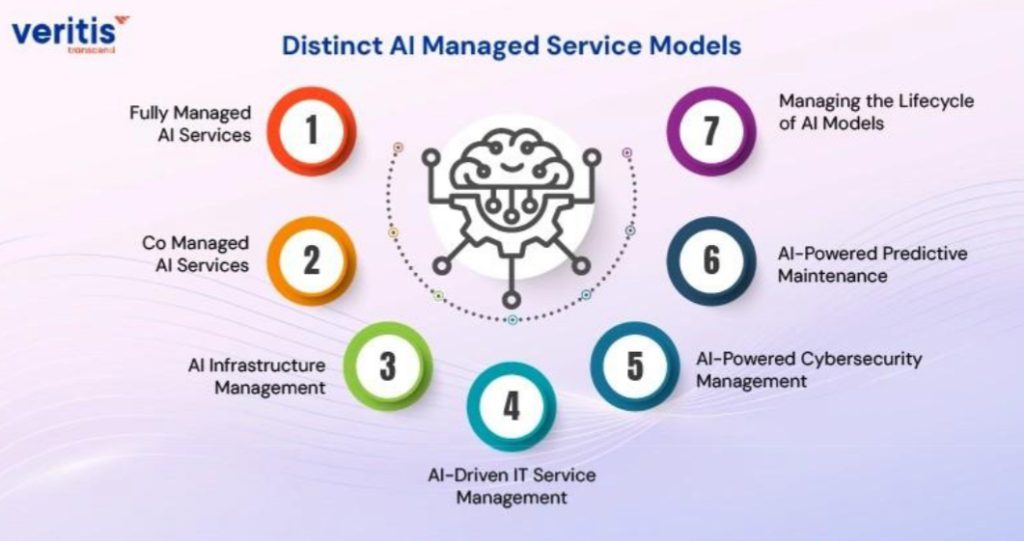
Image Source: Veritis
MSP technology stacks are evolving rapidly as artificial intelligence reshapes modern service delivery. Many MSP leaders now expect AI driven offerings to generate 11 to 50 percent of future revenue while improving operational efficiency by around 20 percent.
Key capabilities driving this transformation include:
- AI Powered Data Management and Cleansing
AI platforms unify data across networks, applications, servers, and cloud environments to create a clear, real time view of infrastructure health. This reduces data silos and helps MSPs quickly understand business impact. - Predictive Asset Monitoring With Machine Learning
Machine learning models analyze usage patterns and historical data to detect early signs of failure. This proactive approach reduces downtime, extends asset life, and improves technician productivity. - Incident Pattern Recognition and Automated Resolution
AI driven incident tools group related alerts, reduce noise, and automatically resolve repetitive issues. Many MSPs report significant reductions in alert volume and faster response times. - AI Enhanced Security Monitoring and Threat Detection
AI continuously monitors network activity to identify anomalies and trigger automated remediation. This shortens response times, lowers false positives, and improves overall threat detection accuracy. - Intelligent Service Prioritization and Decision Support
AI helps MSPs prioritize incidents and service requests based on business impact, risk, and urgency. This ensures critical issues are addressed first while resources are allocated more effectively.
Automation vs AI: Understanding the Tools MSPs Use
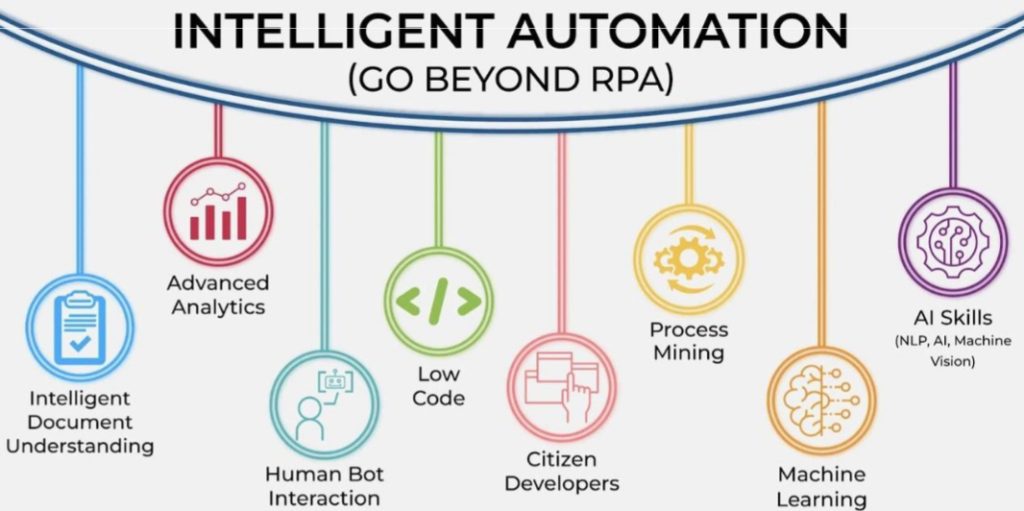
Image Source: Encord
Automation and artificial intelligence are often grouped together, but they serve distinct roles in modern MSP operations. While automation focuses on consistency and speed, AI adds adaptability and insight. Used together, these technologies help MSPs scale efficiently while improving service quality and responsiveness.
Key tools MSPs rely on include:
- Business Process Automation and Intelligent Automation
Traditional automation executes predefined, rule based tasks with precision and consistency. Intelligent automation extends this approach by combining AI, machine learning, and RPA to manage more complex, end to end workflows that can adapt to changing conditions. - Generative AI for Client Facing Services
MSPs use generative AI to support Tier 1 requests through chatbots, summarize tickets, refine documentation, and generate scripts or templates. These capabilities reduce response times and allow technicians to resolve issues more quickly. - Integrated RPA, NLP, and Machine Learning Workflows
RPA automates structured tasks, NLP enables systems to understand unstructured inputs such as emails and tickets, and machine learning adds predictive insight. Together, they create intelligent workflows that reduce manual effort across multi step support processes. - Adaptive Incident Handling and Escalation Logic
AI enables dynamic routing and escalation of issues based on context, urgency, and business impact. This ensures the right resources are applied at the right time without relying on static rules. - Continuous Process Optimization Through Learning Systems
Unlike traditional automation, AI driven systems improve over time by learning from outcomes and historical data. This allows MSPs to refine workflows, reduce errors, and improve efficiency without constant manual reconfiguration.
Revenue Impact: How AI-Enabled MSPs Drive Client Growth
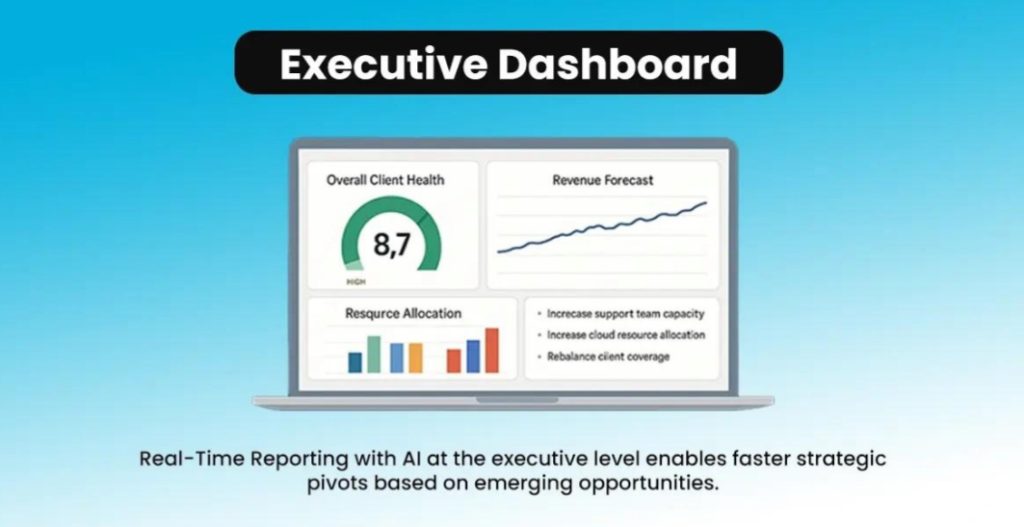
Image Source: IT By Design
AI implementation’s financial results are clear. MSPs report measurable gains in multiple performance indicators. The hard data demonstrates how AI reshapes service delivery into client revenue growth.
Reducing Downtime and Operational Costs
AI has reshaped how MSPs handle infrastructure management. Machine learning helps MSPs anticipate IT issues before they occur, which changes their approach from reactive repairs to proactive maintenance. Early identification of potential equipment failures through this predictive approach reduces downtime by 5-15% and increases overall equipment effectiveness.
Studies show that AI optimization of business processes cuts operational costs by approximately 30%. An MSP’s implementation of AI-powered automation decreased manual intervention and created labor cost savings that benefited customers directly.
Improving Customer Retention with Faster Resolution
Resolution speeds directly impact client loyalty. MSPs using AI see a 60% reduction in ticket resolution times. Forrester research confirms that MSPs who use AI-based automation and analytics have boosted client retention by nearly 30%.
Several improvements drive this satisfaction increase. AI chatbots provide 24/7 support, intelligent triage prioritizes urgent issues, and sentiment analysis enables more empathetic responses. A 2025 Zendesk report reveals that 75% of consumers now prefer AI assistants for support queries.
Discovering New Revenue Streams via AI Consulting
AI consulting has emerged as a profitable service offering. While 92% of MSPs plan to invest in AI, 87% lack the experience to meet customer needs—creating immediate market opportunities. Progressive MSPs now offer:
- AI strategy development and implementation
- Custom workflow automation design
- Ongoing AI system optimization and training
These premium services command 20-40% higher pricing than traditional reactive support. MSPs have grown their client base by 40-60% without proportionally increasing staff costs.
Scaling Service Delivery Without Losing Operational Control
AI gives MSPs a clear advantage by allowing them to scale services without increasing costs at the same pace. With automated and repeatable workflows, many providers can expand capacity by up to 40 percent without adding staff. This removes one of the biggest historical limits on growth.
Standardized AI playbooks help ensure consistent service across clients while guiding technicians through decisions in real time. As a result, fewer issues require managerial oversight, and teams spend less time reacting to avoidable problems. Predictive dashboards further support this shift by highlighting risks early and filtering out low value alerts, which significantly reduces emergency tickets.
For MSPs delivering IT support for MSP companies, this operational control translates into faster resolution times, better resource planning, and stronger client satisfaction. Technicians are freed from routine tasks and can focus on strategic initiatives that improve infrastructure and support long term client goals, increasing both efficiency and perceived value.
What the Next Era of MSP Leadership Looks Like
The role of the managed service provider has shifted in a fundamental way. AI has moved MSPs away from reactive support models and toward a position of strategic influence inside client organizations. This change is not driven by technology alone. It is driven by results that clients can see, measure, and justify through stronger performance, lower risk, and higher returns.
What separates leading MSPs is intent. They invest with purpose, align AI initiatives with client goals, and redesign operations around consistency and insight rather than volume and effort. This approach creates trust, strengthens long term relationships, and opens the door to premium services that extend far beyond traditional support.
As client expectations continue to rise, MSPs that treat AI as a core capability rather than an experiment will define the next phase of the industry. Those that act now position themselves not just as service providers, but as partners that help clients grow, adapt, and compete with confidence in an increasingly intelligent world.