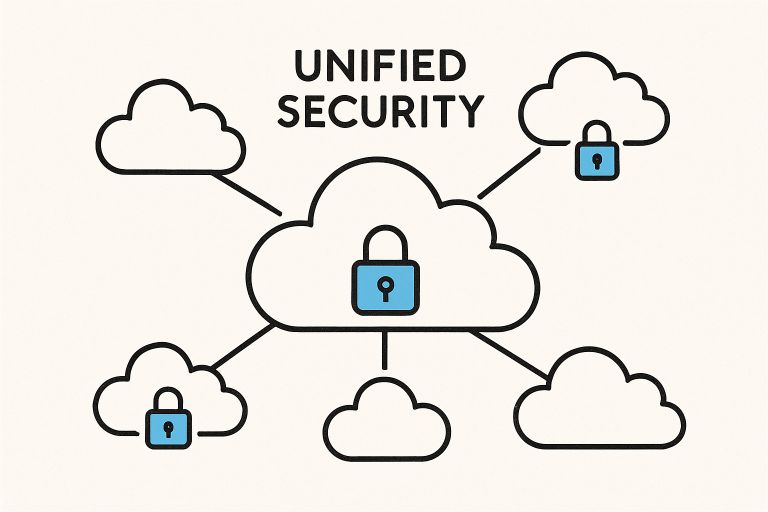
In today’s fast-paced business world, adopting multiple cloud providers is common practice. This strategy brings agility, scalability, and added resilience to organizations, while also introducing complex security considerations. Managing and securing a network that stretches across multiple clouds requires an adaptive, unified approach. Leveraging solutions like Managed SD-WAN services can help simplify multi-cloud connectivity while maintaining consistent security postures.
In a multi-cloud environment, the challenge isn’t just about security. It’s also about ensuring that each system works cohesively, enforces the same level of policy control, and responds efficiently to threats. Organizations must identify their most critical assets, regulate the flow and movement of data, and be prepared for a rapidly evolving threat landscape.
As cyber threats continue to grow in sophistication, aligning cloud management with robust security practices becomes more critical. The right security foundation ensures regulatory compliance, operational continuity, and protection of sensitive data—no matter where it resides or moves.
Implementing proactive strategies to protect multi-cloud environments can help organizations address unique risks. For more context on the cloud security space, refer to authoritative guides published by CSO Online for current trends and analysis.
Implement a Zero Trust Security Model
Redefining Trust in a Distributed Cloud Environment
A Zero Trust Architecture (ZTA) eliminates the assumption that users or devices are trustworthy solely because they are within a corporate perimeter. The model enforces continuous verification and granular access controls for all interactions, regardless of origin.
- Define the Protect Surface: Identify and prioritize the most valuable data, applications, and assets in your environment.
- Map Transaction Flows: Understand application communication paths to architect least-privilege connections.
- Enforce Strict Access Controls: Implement multi-factor authentication, identity-based access controls, and device compliance checks for all users and endpoints.
Zero Trust significantly limits potential attack surfaces and enhances your ability to prevent unauthorized lateral movement within networks.
Standardize Security Policies Across Cloud Platforms
Unified Security for Diverse Environments
Disparate security controls between different cloud providers can lead to misconfigurations and gaps. To mitigate these risks, develop clear, consistent security policies that apply equally across all environments.
- Develop Uniform Security Policies: Standardized policies reduce errors, simplify audits, and ensure that every cloud follows the same protocols.
- Utilize Cloud-Agnostic Security Tools: Deploy security tools capable of integrating with all major cloud providers for centralized visibility and management.
This approach creates fewer blind spots and helps IT teams focus on strategic security improvements rather than routine fire-fighting.
Strengthen Identity and Access Management (IAM)
The Frontline of Multi-Cloud Security
IAM is the backbone of managing user privileges and access to assets. In a multi-cloud scenario, centralization is key for consistent enforcement and monitoring.
- Centralize IAM Systems: Manage accounts and permissions from a unified platform to streamline administration and logging.
- Apply the Principle of Least Privilege: Limit access strictly to what’s needed for users’ roles.
- Multi-Factor Authentication (MFA): Requires multiple forms of verification to access critical systems and data.
An effective IAM strategy not only reduces the risk of both internal and external threats but also enables quick containment in the event of an account compromise.
Encrypt Data in Transit and at Rest
Securing Data Wherever It Goes
Encryption is fundamental to data security, especially when your information crosses third-party clouds and the public internet.
- Encrypt Data at Rest: Use strong encryption standards (like AES-256) to protect files and databases.
- Encrypt Data in Transit: Ensure every connection uses up-to-date protocols such as TLS 1.2 or higher.
- Key Rotation: Regularly change encryption keys to prevent unauthorized access if a key is ever exposed.
These measures render intercepted data unreadable, thereby strengthening your defenses even if attackers gain access to the underlying infrastructure.
Monitor Cloud Activity and Conduct Regular Security Audits
Continuous Vigilance and Proactive Incident Response
Monitoring user and resource activity across multiple clouds is vital for early threat detection and rapid response.
- Real-Time Monitoring: Use advanced SIEM (Security Information and Event Management) and AI-powered tools to spot unusual behaviors.
- Alerts and Automation: Set up automated investigations and alerting to address anomalies swiftly.
- Routine Audits: Periodically review and update your security stance to close vulnerabilities and adapt to new threats.
Regular audits also support compliance efforts and continual improvement.
Secure APIs and Inter-Cloud Traffic
Protecting the Pipelines of Cloud Communication
APIs enable essential integrations between services but are frequently targeted by attacks. Protecting these channels is non-negotiable.
- API Gateways: Centralize and secure API traffic with gateways that authenticate and filter calls.
- Strong Authentication and Authorization: Ensure only legitimate users can access APIs, using tokens and role-based access controls.
- Patch and Update Frequently: Remediate vulnerabilities before they can be exploited.
Strong API security helps prevent data breaches and ensures secure data transfer between cloud workloads.
Utilize Firewalls and Security Groups
Managing Perimeter and Internal Segmentation
Even in a cloud-native world, traditional perimeter security concepts, such as firewalls and security groups, remain effective.
- Virtual Firewalls: Deploy at both network and application layers to control traffic and block malicious requests.
- Security Groups: Utilize granular rule sets to manage connectivity for cloud assets and network segments.
Segmentation and access rules minimize the impact of breaches and help enforce organizational security policies throughout the entire organization.
Collaborate with Cloud Security Experts
Gaining Specialized Guidance and Support
Consulting seasoned cloud security professionals enables organizations to more effectively assess risks, comply with evolving standards, and develop customized security architectures.
- Comprehensive Risk Assessments: Identify threats specific to your environment.
- Compliance Strategy: Address regulatory gaps before they become fines or breaches.
- Implementation Assistance: Access practical expertise when deploying new tools or policies.
Partnering with the right experts accelerates both technical and organizational maturity in multi-cloud security.
By systematically applying these best practices, organizations can significantly strengthen their security postures, weather evolving threats, and confidently operate in today’s complex cloud ecosystem.